
I feel blessed whenever I come across some genuine saint. Because through the same world that we live in but never become of it, they blossom out as a lotus from slush!
“In 1874 he locked himself in a room (still in existence) in Móttakuppam.., which he used for samádhi or mystic meditation, and instructed his disciples not to open it for some time. He has never been seen since, and the room is still locked.”
We’ve seen similar incidents with the great devotees like Sri Chaitanya Mahaprabhu and Sri Andal.
Reference in the then Govt records Madras District Gazetteers: South Arcot by W. Francis
Publication date 1906

Such a miracle on records of the British Raj! And some of our Indian still go about asking if all this is real or scientific. Like a frog under the lotus flower, never tasted the honey, but let a bee from somewhere comes over and relishes it away!
I feel very grateful to also note that the Mission of Amarantos to “Wipe a tear and bring a smile” is in complete alignment with his core teaching.
His approach like ours isn’t “First become enlightened, and afterwards help others.”
The path to Him is through Seva (selfless service in what ever we can, and our path is PLRT)
So here is a short writeup about his life,
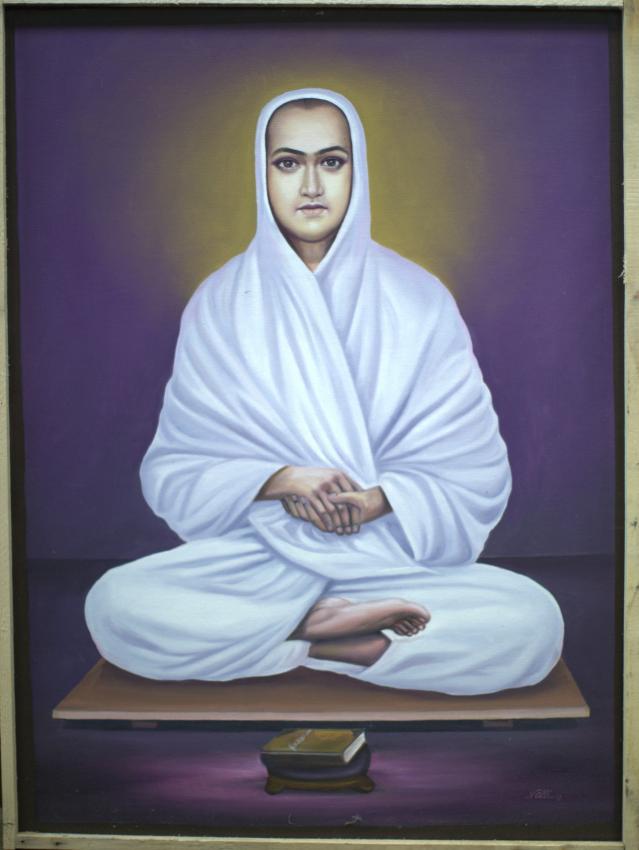
Vallalar — The Saint of Infinite Compassion and Divine Light
Vallalar, also known as Ramalinga Swamigal or Ramalinga Adigal, was one of India’s greatest spiritual saints and reformers. Born in 1823 in Tamil Nadu, he devoted his life to revealing the unity of all existence and awakening compassion in the human heart.
He proclaimed the Supreme Divine as Arutperunjothi — the Infinite Light of Grace, and taught that true spirituality begins with Jeevakarunyam, compassion towards every living being. For Vallalar, feeding the hungry was the highest form of worship, and causing pain to any creature was contrary to the Divine.
He opposed caste discrimination, religious division, animal sacrifice and all forms of cruelty. He established the Sathya Dharma Salai at Vadalur, where food was offered freely to everyone without distinction. The sacred fire lit there continues to burn, symbolising his eternal mission of relieving hunger.
Through thousands of devotional verses collected as the Thiru Arutpa, Vallalar described the transformation of human consciousness through love, purity, prayer and Divine Grace. He taught that when compassion becomes complete, the human being can be transformed into a radiant embodiment of Divine Light, transcending disease, ageing and death.
In 1874, Vallalar entered a room at Mettukuppam and instructed his followers not to disturb him. When the room was later opened, he was no longer physically present. His devotees believe that he attained the highest state he had described—the merging of the physical form into the Deathless Divine Grace-Light.
Vallalar’s life remains an eternal message to humanity:
See every life as your own. Feed the hungry. Harm no being. Live in compassion, and become one with the Infinite Light of Grace.
The Thiru Arutpa he authored contains approximately 6,000 songs or verses, amounting to roughly 40,000 poetic lines, arranged in six Thirumurais. The Sixth Thirumurai contains sections explicitly titled “Attainment of the Indestructible Form of Grace,” “Attainment of the Golden Form,” and “The Great Deathless Life.”
Vallalar’s entire teaching in one sentence
When compassion becomes absolute, the individual becomes receptive to Divine Grace, which can transform the mind, consciousness and, according to Vallalar, ultimately even the physical body into a deathless body of Divine Light.
However, the transformation into light is not presented merely as a breathing technique, yogic exercise or secret physical process.
Vallalar’s real starting point is how one responds when another living being is hungry, frightened, suffering or being killed.
The essence of what he wrote
1. God is the Infinite Grace-Light
Vallalar increasingly described the Supreme Reality as:
Arutperunjothi — the Vast or Infinite Light of Divine Grace
and inseparably associated that Light with:
Thaniperum Karunai — incomparable, supreme compassion.
For Vallalar, Divine Light and Divine Compassion are not two separate things. To become filled with compassion is to begin manifesting the Divine Light within oneself.
2. Compassion is the doorway to transformation
His central discipline is Jeevakarunya Ozhukkam—the ethical and spiritual practice of compassion toward all living beings.
It means:
-
Relieving hunger and suffering.
-
Refusing to kill.
-
Refusing food obtained through killing.
-
Protecting frightened and helpless beings.
-
Seeing the same Divine Life in humans, animals and every living creature.
-
Feeling another being’s pain almost as one’s own.
Vallalar taught that killing one being to feed another contradicts compassion because every living being is a place in which Divine Grace manifests.
This is why feeding the hungry was not merely charity for him—it was one of the highest forms of worship. He established the Dharma Salai at Vadalur so that anyone could be fed without distinctions of caste, religion or social status.
3. The real impurity is cruelty and separation
The ordinary human body is governed by:
-
Hunger and desire
-
Fear and insecurity
-
Anger and violence
-
Ego and possessiveness
-
Caste, religious and social divisions
-
Attachment to pleasure
-
Indifference to other beings
-
Disease, ageing and death
Vallalar taught that these are not merely moral shortcomings. They are expressions of a deeper consciousness of separation.
The body cannot become a body of Divine Love while the person continues to nourish hatred, cruelty, exploitation or indifference.
4. Purification has four dimensions
Vallalar’s discipline is commonly organised into four kinds of Ozhukkam, meaning disciplined or harmonious conduct:
Indriya Ozhukkam — discipline of the senses
Purifying what one sees, hears, speaks, eats, touches and does. Speech should be truthful, gentle and useful; the senses should not be used to injure or exploit.
Karana Ozhukkam — discipline of the mind
Reducing ego, anger, jealousy, prejudice, harmful imagination and obsessive desire. The mind gradually becomes centred in the Divine Light.
Jeeva Ozhukkam — discipline in relation to human beings
Treating people without caste, religious, gender, status or community discrimination. Every person belongs to one spiritual family.
Anma Ozhukkam — discipline of the soul
Seeing the Divine presence not merely in humans but in every form of life. Compassion expands until it becomes universal and spontaneous. (VallalarSpace)
The three stages of the “Light Body”
Vallalar’s descriptions are scattered across devotional songs, prayers and discourses rather than presented as a single technical manual. His followers and interpreters generally summarise the transformation in three stages.
1. Suddha Deham — the Pure Body
The ordinary body becomes purified by:
-
Universal love
-
Non-killing
-
Compassion
-
Sensory and mental discipline
-
Prayer
-
Surrender to Divine Grace
-
Freedom from destructive emotions and divisions
It is also described as the Anbu Deham, or Body of Love, and in some poems as a radiant or golden body.
The important point is that the first transformation is not from flesh into photons. It is from self-centred existence into embodied compassion.
2. Pranava Deham — the Body of Grace and Light
The purified body becomes increasingly governed by Divine Grace rather than ordinary ego-consciousness.
This is described as a subtler, luminous or grace-filled body. Individual identity becomes transparent to the Divine Presence.
3. Gnana Deham or Oli Deham — the Body of Wisdom-Light
The final stage is described as complete identification with Divine Wisdom and Divine Light.
In Vallalar’s tradition, this is not merely liberation after death. It is the possibility of the whole being—including the body—participating in a deathless Divine Life. Commentarial traditions therefore describe Suddha Deham, Pranava Deham and Gnana Deham as successive vehicles of immortality.
His poems do not speak only of metaphorical enlightenment. They refer to receiving a radiant or golden body and even a “deathless golden body.” He believed that Divine Grace could effect an actual transformation of embodied human existence.
But three levels of meaning operate simultaneously:
-
Ethical transformation: cruelty becomes compassion.
-
Spiritual transformation: ego-consciousness becomes Divine consciousness.
-
Bodily transfiguration: the mortal body becomes a deathless body of Grace and Light.
The first two can be understood and practised directly. The third remains a mystical and devotional claim, not a scientifically demonstrated biological process.
What Vallalar says actually produces the transformation
It is not primarily extreme austerity, occult powers, herbs or forced breath control.
The essential process is:
Compassion → Purification → Universal Love → Receptivity to Grace → Divine Illumination → Transformation
Human effort prepares the vessel, but Vallalar repeatedly attributes the ultimate transformation to Arul—Divine Grace.
In other words:
You do not manufacture the Light Body.
You remove cruelty, ego and separation until Grace can reveal and transform what you truly are.
“Pasithiru, Thanithiru, Vizhithiru”
Vallalar’s teaching is also remembered through three compact instructions:
Pasithiru — Remain hungry
Not deliberate starvation, but moderation, humility and an enduring hunger for truth and Divine Grace.
Thanithiru — Remain inwardly alone
Do not be governed by the crowd, social conditioning or attachment. Preserve an inner space for communion with the Divine.
Vizhithiru — Remain awake
Remain spiritually vigilant. Do not fall back into ignorance, cruelty, mechanical living or unconscious desire. These expressions are commonly interpreted as disciplined appetite, inward detachment and sustained awareness. (VallalarSpace)
The most important insight people overlook
Vallalar did not teach:
“First become enlightened, and afterwards help others.”
His position was closer to:
Your response to another being’s suffering determines whether Divine Grace can operate through you.
Someone may meditate for years, experience visions and speak eloquently about spirituality. But when that person remains unmoved by hunger, suffering or the killing of animals, Vallalar would not consider the spiritual transformation complete.
His own poems describe him withering when he saw crops wither, fainting inwardly when he saw hungry people and trembling when he witnessed suffering. He declared that his life and compassion were inseparable. (dn720300)
A condensed map of Vallalar’s path
Ordinary body
↓ recognition of suffering
Jeevakarunyam—compassion for all life
↓ non-killing, feeding, equality and service
Purification of senses and mind
↓ surrender, prayer and contemplation of Divine Light
Anbu Deham—Body of Love
↓ descent or manifestation of Divine Grace
Suddha Deham—Pure or Golden Body
↓ fuller embodiment of Grace-Light
Pranava Deham—Body of Grace and Light
↓ complete Divine Wisdom
Gnana/Oli Deham—Deathless Body of Wisdom-Light
The best texts for understanding it
The clearest reading sequence is:
-
Jeevakarunya Ozhukkam — explains why compassion, relieving hunger and non-killing are indispensable.
-
Arutperunjothi Agaval — a mystical account of Divine Grace-Light and Vallalar’s inner transformation. (VallalarSpace)
-
The Sixth Thirumurai of Thiru Arutpa — especially the sections concerning the indestructible grace-form, golden form, pure Siva-state and deathless life. (Tamil Virtual Academy)
The most faithful summary of all 40,000 lines would therefore be:
Recognise the same Divine Life in every being. Let no creature suffer through you. Feed the hungry, abandon division, purify the senses and mind, live in universal compassion, contemplate the Infinite Grace-Light and surrender completely to Grace. As love becomes perfect, the human being becomes a vessel of Divine Light—culminating, according to Vallalar, in the transformation of the mortal body into a deathless body of Grace and Wisdom.
What’s your major take away if you’ve been able to read this far.


